The Clauses Worth Reading Twice: Five Contract Terms That Decide Who Owns the Relationship
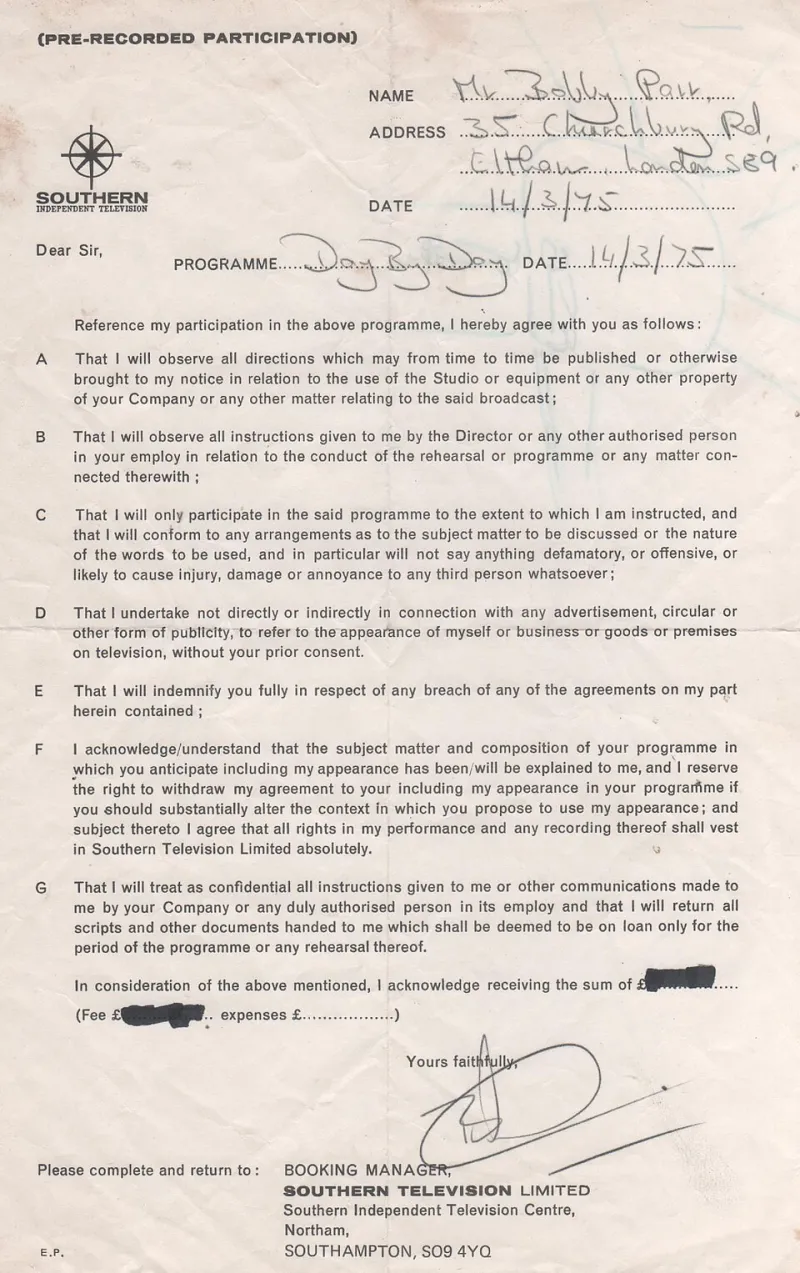
Photo: Robert parrin, CC BY-SA 4.0, via Wikimedia Commons
Nobody opens a new project by imagining the dispute. That is precisely why contract problems compound: the omission sits quietly for weeks, then surfaces at the worst possible moment, usually with a deadline attached.
Below are five clauses that creative professionals routinely waive, ignore, or assume are boilerplate. Each one is explained in plain English, tied to why it matters for freelancers and studios operating in the United States, and paired with language you can actually send back. This is educational, not legal advice — for high-value or unusual engagements, a contract attorney is the correct call.
1. Revision Limits
What it says, in plain English: The client is entitled to a defined number of revision rounds, and anything beyond that is billed separately or requires a new agreement.
Why it matters: "A few rounds" is not a scope term; it is a mood. Without a number, revisions expand until the relationship sours. The clause does more than protect your calendar — it forces the client to sequence feedback and consolidate notes, which materially improves the work.
How to negotiate it: Frame the clause around decision quality, not your tolerance. A workable line: "Two rounds of consolidated revisions are included at each phase. Additional rounds are billed at $X per round, which keeps the timeline intact for your launch date." Attach the schedule. Nobody argues with a schedule.
2. The Kill Fee
What it says, in plain English: If the client cancels the project without cause, a percentage of the remaining fee is due, tiered to how far the work has progressed.
Why it matters: Cancellation is the only risk that a deposit never covers. A 50% deposit protects the first half of the work and leaves the second half exposed. Tiered kill fees — commonly 25% shortly after kickoff, rising to 75–100% as delivery approaches — convert that exposure into a predictable, negotiable number instead of a collections problem.
How to negotiate it: Offer the tier table rather than a single figure, and note that the fee is credited against work already performed. Clients who genuinely intend to finish rarely push back. Clients who do push back have just told you something useful.
3. Usage Rights and Licensing Scope
What it says, in plain English: Exactly what the client may do with the work, where, for how long, and in which media — with copyright ownership addressed explicitly.
Why it matters: In the US, copyright generally stays with the creator unless it is assigned in writing. That default is your most valuable negotiating asset, and it evaporates the moment a broad clause transfers everything in perpetuity. Unlimited, worldwide, all-media rights are a different product from a one-year regional campaign, and they should never be priced the same way.
How to negotiate it: Rename the conversation. Instead of debating ownership, propose licensing tiers: term, territory, channels, exclusivity. Then price each tier. Many clients discover they need far less than they initially requested once the options have numbers attached. If a client insists on full assignment, that is legitimate — as a separately priced line item.
4. AI and Derivative-Work Permissions
What it says, in plain English: Whether the client may feed your deliverables into generative systems, use your work to train models, or create derivative works, and under what conditions.
The clause that did not exist a few years ago is now among the most consequential in any agreement. Two directions need coverage: what the client may do with your output, and what you may use internally to produce it. Disclosure requirements are tightening across US state legislatures and procurement departments, and platform terms shift faster than contracts do.
How to negotiate it: Keep it concrete rather than philosophical. A reasonable formulation: "Client may not use deliverables, in whole or in part, as training input for generative models without prior written consent. Contractor will disclose any generative tools used in producing the deliverables." That sentence has survived more procurement reviews than any essay about creativity ever will.
5. Indemnification and the Liability Cap
What it says, in plain English: Who pays if a third party sues over the work, and what the maximum exposure is for each side.
Why it matters: A one-directional indemnity clause asks a freelancer to absorb unlimited legal risk in exchange for a fixed fee. That is not a working relationship; it is an uncapped wager. Infringement exposure is real, but the appropriate response is a warranty paired with a cap, not an open-ended promise.
How to negotiate it: Reciprocal language is the easiest sell. Offer to warrant that your work is original and to indemnify the client for infringement arising from your own deliverables — capped at the total fees paid under the agreement — and ask for the same protection regarding materials the client supplies. Note the cap in your cover email so it does not read as a surprise in redlines.
The Manner Matters
None of these requests require a confrontational tone. The most effective pattern is unremarkable competence: reference your standard template, explain the operational reason in one sentence, and offer an alternative path. A clause you can justify in plain English reads as professionalism. A clause you cannot justify reads as a liability.
Read the agreement twice. The second time, ask what happens if everything goes wrong. The answers still belong in the document, not in your memory of a phone call.