Dormant Is Not Dead: Honoring the Hidden Seasons That Make Creative Work Worth Doing
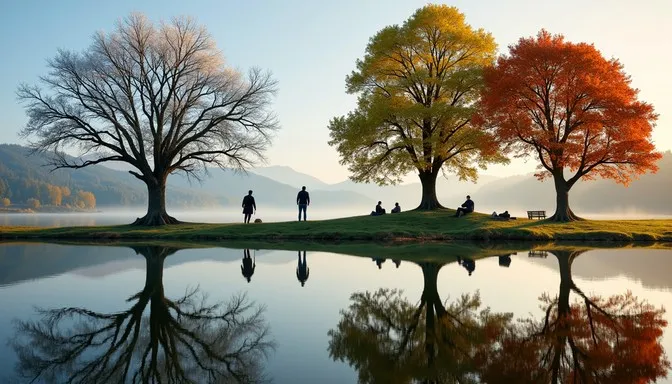
Photo: creative professional resting contemplating nature seasons change, via images.stockcake.com
The Myth of the Always-On Creative
There is a particular kind of exhaustion that does not announce itself. It arrives quietly, dressed as a creative block or a string of uninspired deliverables. You are still working. The invoices are still going out. But something essential has gone flat, and no amount of discipline or deadline pressure seems to restore it.
For many creative professionals, this experience is treated as a personal failing — a motivation problem to be corrected through better habits or a more aggressive schedule. The industry, particularly in the American market, has long rewarded visible productivity above almost everything else. Output signals commitment. Busyness implies value. Rest, in this framework, is something you earn after the work is done, not something you integrate into the work itself.
But that framing gets the biology of creativity exactly backward.
The most enduring creative careers are not built on relentless output. They are built on rhythm — an attentiveness to the internal cycles that govern when ideas are ready to be made and when they are still forming underground, unseen and necessary.
What the Seasons Actually Look Like
Nature offers a useful analogy here, and not an accidental one. Agricultural cultures understood intuitively that soil left to produce continuously without rest eventually yields diminishing returns. Fallow periods were not failures of the land. They were investments in its future capacity.
Creative work operates on a similar logic. There are broadly four seasons that most professionals cycle through, though rarely in perfect order and rarely on a fixed calendar.
Growth seasons are the periods most people recognize as productive. Ideas arrive with ease. Projects gain momentum. The work feels connected to something larger than the immediate task. These are the seasons worth protecting — not by forcing them to last indefinitely, but by documenting what made them possible.
Harvest seasons follow, characterized by consolidation rather than generation. You are completing, refining, and delivering. The creative energy is still high, but it is focused rather than expansive. This is the season most clients see, and it is often mistaken for the only season that matters.
Dormant seasons are the ones that tend to alarm both creatives and their clients. Output slows. Experimentation replaces execution. The work may look unfocused from the outside, but internally, something essential is being reorganized. Dormancy is not stagnation. It is the necessary predecessor to the next growth cycle.
Transition seasons are perhaps the most disorienting. You are moving between modes but have not yet arrived anywhere. These are the periods of restlessness and questioning that often precede a significant creative evolution. Many professionals abandon promising directions during transition seasons simply because discomfort is mistaken for wrongness.
Why Forced Productivity Costs More Than It Earns
The economic argument for rest is rarely made explicitly in creative industries, which is a significant oversight. When a creative professional pushes through a dormant season without acknowledgment — grinding out deliverables on schedule while internally depleted — the consequences extend well beyond personal wellbeing.
Work produced under those conditions tends to be technically adequate but creatively hollow. It lacks the distinction that makes a body of work memorable. Over time, a portfolio filled with hollow work communicates something to the market: that this professional is a capable executor rather than an original thinker. That distinction matters enormously for long-term positioning and rate integrity.
There is also the compounding cost of creative debt. Much like financial debt, creative debt accumulates when you borrow against future capacity to meet present demand. At some point, the interest comes due — usually in the form of a prolonged creative drought, a crisis of professional identity, or both.
Intentional rest, by contrast, is not lost revenue. It is infrastructure maintenance. The professional who builds recovery into their annual planning is protecting the asset that generates all of their income: their creative capacity itself.
A Practical Framework for Seasonal Awareness
Recognizing which season you are in requires honest self-assessment rather than wishful thinking. The following questions offer a starting point.
On energy: Are you generating ideas readily, or does each one feel effortful? Is your curiosity active, or has it gone quiet? Energy quality — not just quantity — is one of the most reliable indicators of creative season.
On output: Are your recent deliverables representative of your best work, or are they serviceable approximations? When was the last time a piece of your work genuinely surprised you?
On appetite: Are you consuming creative material — reading, watching, listening, experiencing — with genuine interest? Or has that input stream also gone dry? Dormant seasons often manifest first as a loss of curiosity about others' work.
On time: How long have you been in this state? A week of low output may simply be circumstantial. Several months of it is a season, and it warrants a strategic response rather than a motivational one.
Once you have identified your current season, the planning question changes. Instead of asking how to produce more, you ask what this season is asking of you. Dormant seasons call for input and experimentation, not output targets. Transition seasons call for patience and documentation, not premature commitment to a new direction.
Building a Practice That Breathes
For creative professionals operating as independent practitioners or small studio owners, seasonal planning requires some structural intentionality. The default business model — accept all available work, deliver continuously, repeat — does not accommodate natural creative rhythms. It must be designed to do so.
This might mean building quarterly reviews into your practice that assess not just revenue and client pipeline, but creative vitality. It might mean reserving a portion of your annual capacity for unbillable exploration — the kind of work that feeds future client work without being legible as such in the short term. It might mean communicating more honestly with long-term clients about the relationship between your creative health and the quality of what you deliver to them.
None of this is soft or indulgent. It is, in fact, one of the more rigorous forms of professional management available to a creative practitioner.
The careers that endure — the ones that accumulate genuine authority over time — belong to professionals who learned early that the work has a life of its own. Their job was never to force it into constant production. Their job was to understand its rhythms well enough to work with them.
Dormancy, in that context, is not a problem to be solved. It is a season to be honored — and planned for, with the same seriousness you would bring to any other strategic investment in your practice.